







Heritage Walk

tripadvisor logo

(2)

Call

Advertisement

Photos

1a Storgaten
Grimstad 4876
By the tourist office, cross the road at the traffic lights. Enter Storgaten (pedestrian precinct), and then turn left by Nedre Tverstredet. Walk past Reimannsgarden, Grimstad Art Society. Continue up Vestregate, cross Nygaten and follow Markveien past the Technical College. Turn left into Torsgate, then cross Tonnevoldsgate where you’ll see Grom, the oldest farm in Grimstad, directly ahead. Continue on to Berge Gard, one of Grimstad’s former manor farms. Today, it is used as a nursing home, and the gardens can be enjoyed by everyone. At the end of Bergekleiva is Grimstad’s old tannery. This was where Otto Andersen, in 1869, found all he needed to open his workshop clean water and oak bark. As you enter Frivoldveien, you can see Fuhr's old production facilities. This impressive brick building/wine cellar was used to produce wine and juice until 1989. On your left is the old Grimstad Vinegar Brewery dating back to 1941-43. Continue along Frivoldveien and up the hill to old Grimstad Hospital with its two large, old wooden buildings. The green unit was where the author Knut Hamsun was detained after the war. Follow the foot and cycle path up the hill and down to Levermyr Idrettspark (sports centre w/ swimming pool). Then turn left and continue down Kirkegaten. As you approach the lower part of town, turn left towards the harbour into Henrik Ibsens Gate with the Ibsen Museum. Turn right and follow the quays until you reach the tourist office. Duration: approx. 45 min Terrain: Flat and on tarmac. Level of difficulty: Easy

Reviews

tripadvisor logo
4.02 reviews
Photo of Willy W
Great way to experience the city
8/20/2017

We parked at the tourist office and got the map for the hike. You can make the hike in sneakers. Not...

Own this business?
See a problem?

You might also like

Grimstad's Archipelago

Grimstad's Archipelago

31
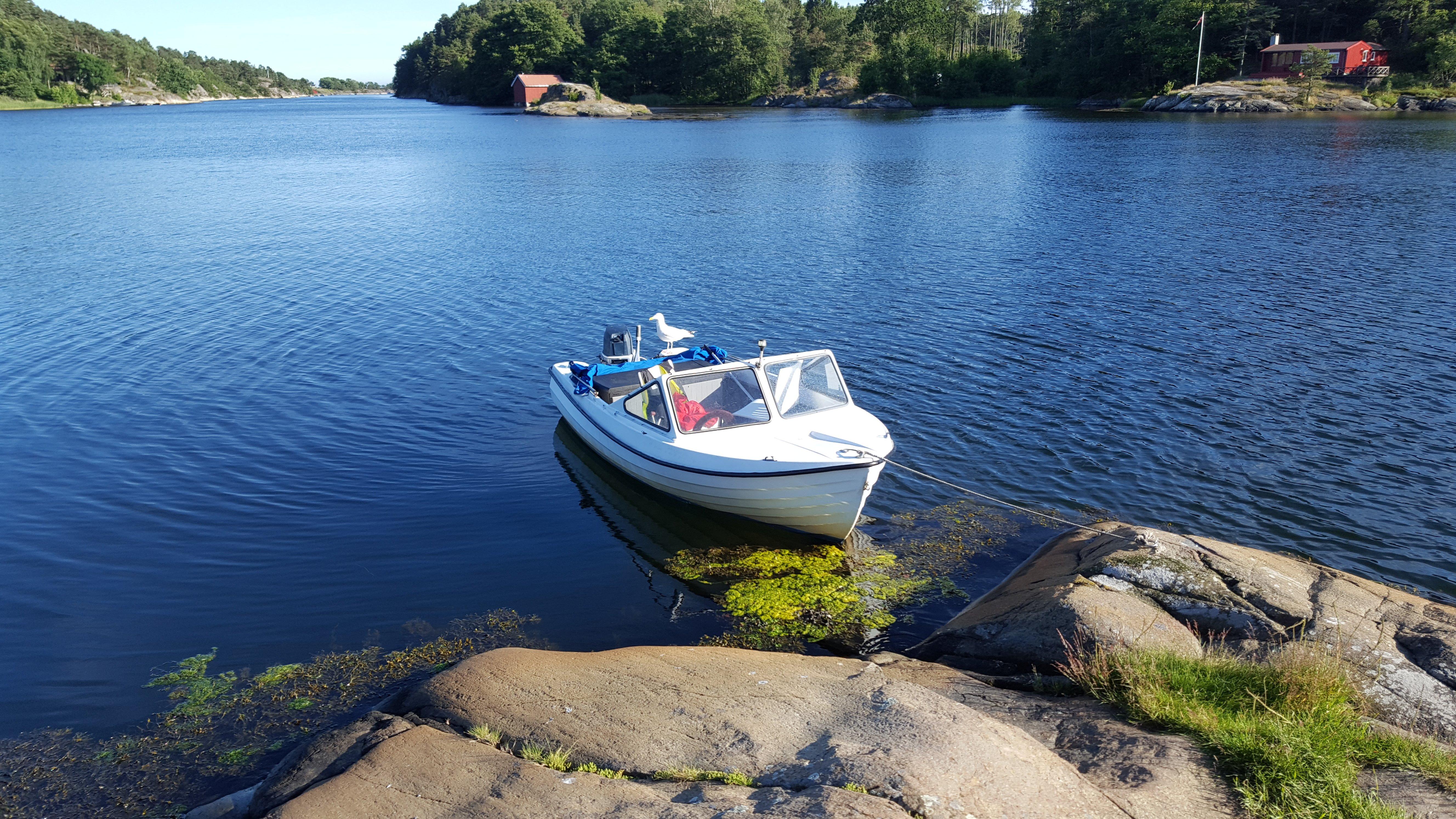
What is a smooth rocky shore? Cliffs and sandy beaches are very common, but the polished rocky shores are unique to Norway – almost. They do exist in other places, but not many. Stretches of such rock formations can be found from the Swedish west coast and up to Stockholm’s archipelago, and also in Greenland, Scotland, Alaska and possibly New Zealand. The rest of the world, however, does not have anything resembling these beautiful shores we associate with Southern Norway and the Oslo Fjord. The reason is that not many areas fulfil the two conditions required for such polished, smooth rocks to be formed. High-grade metamorphic rock such as gneiss or granite is required, and this coarse-grained formation must have been scoured and rubbed smooth by a thick layer of ice. As old as time itself! The Norwegian rocky shores originated long before the ice arrived - maybe as much as a billion years. Formation started 1.8 billion years ago and ended 1200 million years later. The time-span is almost incomprehensible! When the ice retreated for the last time, the rocky shores were given a last finish and took their current shape. This is only 10 000 years ago. Since then, the land has risen as much as 200 metres in some areas. Hence, the rocky shorescurrently lining the water’s edge were far below sea level and a thousand metres or more under the ice when they were formed. As the ice moved, masses of sand, gravel and stone were pushed in front and below. These deposits were pressed down and rubbed against the bedrock with immense force. This was how Norway’s rocky shores were formed. Soft elements were scoured away, and the hard rock was left polished, smooth and rounded. In several areas, characteristic scour lines are still evident, and some cracks in the actual bedrock can also be seen.
NorwayHeritage Walk

Advertisement