






Palladio Museum

Open
tripadvisor logo

(302)

Call
Website

Advertisement

Photos

11 Contra' Porti
Vicenza 36100
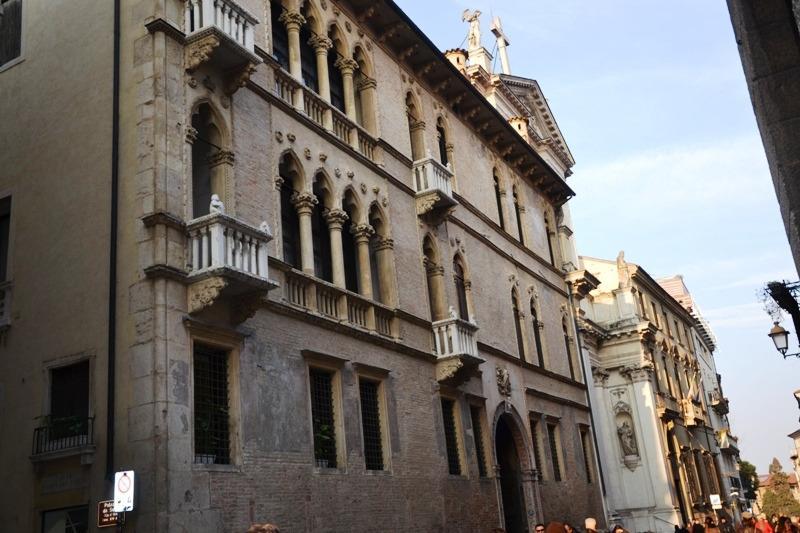
a museum-workshop: this new kind of museum features not only works of art but also the experts who describe them.a museum in movement: having installed the hardware (a system of dynamic lighting for the spaces, video projection systems, showcases, etc), each year the software will change, i.e. the contents, according to the state of progress in studies and research.a marvellous building: one of Palladio's finest palaces and the only one that he saw completed both as regards the architecture and decorations (causing the ruin of the patron, Montano Barbarano).an intellectual challenge: to take specialist knowledge out of the ivory tower and communicate it to a wider public in the museum and on the web.a far from impossible mission: recounting architecture to non-architects, not as a history of buildings but of the people who designed, built and communicated them; and showcasing architectural drawings, the tools that body forth ideas, alongside models, photographs and videos.the beginning of a journey: to explore Palladio's buildings in Vicenza (associated with the Palladio Museum thanks to the combined ticket "Vicenza città bellissima") and his villas in the Veneto countryside.a crossroads: a place where institutions and scholars from various parts of the world work together and present joint projects.
Own this business?
See a problem?

You might also like

The Natural History and Archaeological Museum of Santa Corona
Art gallery

The Natural History and Archaeological Museum of Santa Corona

72
The Natural Hisory and Archaeological Museum, housed since 1991 in the area of the cloisters of Santa Corona, is divided into two sections: Naturalistic and Archaeological. The first is devoted to the illustration of the characteristics of the territory, especially that of Berici, its specific environment also includes several endemic species of flora and fauna. A special attention is devoted to the hills of Vicenza in the Archaeological section too, in its showcases is present a rich documentation of stone tools, evidence of human presence on Berici from the Middle Paleolithic, and then continue with the presentation of Neolithic settlements and the Bronze Age in the Valleys of Fimon, from where come the famous vases square mouth of the village of Molino Casarotto. The Iron Age is reflected from materials of various settlements among which we mention the one located in the city center of Vicenza, near the present Piazzetta S. Giacomo, from here come dozens of votive figurative bronze leaf attesting the activity of this place of worship from the fourth to the first century. a. C. The Roman period is represented expecially by the decorative and architectural remains of the Roman theater of Berga, and by some mosaic fragments from the city center. From Rome, however, comes a collection of ancient statuary, a gift from Girolamo Egidio Di Velo in the early nineteenth century. The exhibition ends with a rich documentation of the presence of the Lombards in the Vicenza area
ItalyPalladio Museum

Advertisement